
Letters That Hit Too Close
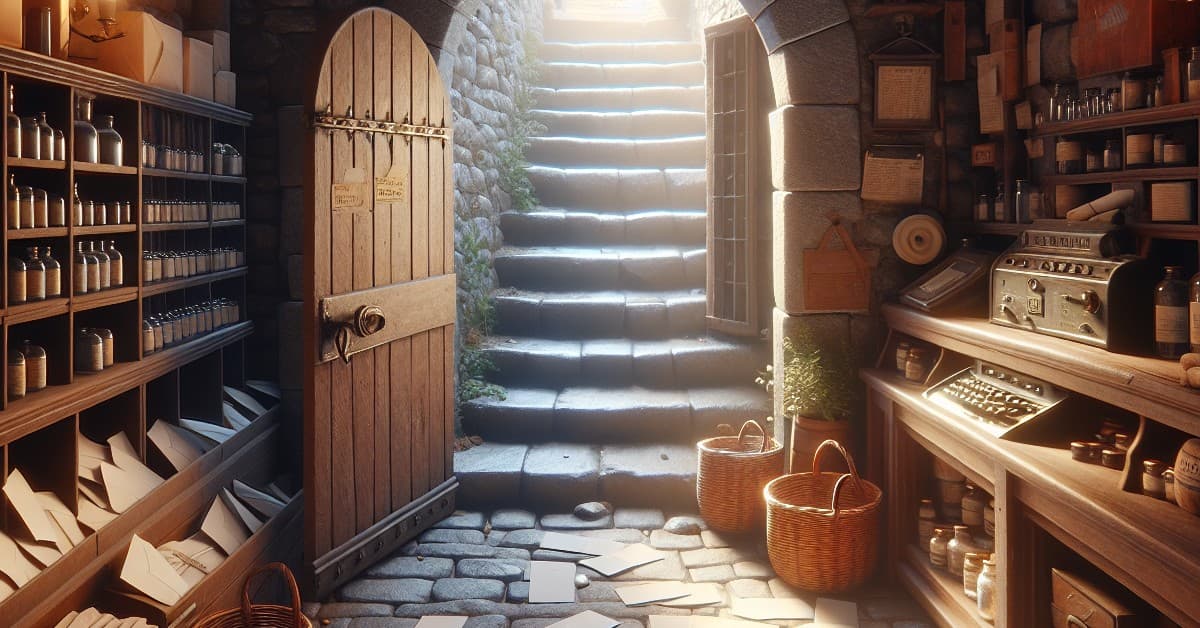
A condolence letter is the first thing that greets you in Dungeon Bodega Simulator. “Hark Elm! We’ve been missing you back at the party, it’s such a shame you got laid off,” reads the scroll in your dim cell-shop. It lands like a critical hit if you’ve been through a layoff yourself—equal parts kind and quietly condescending, the sort of note that stirs up doubt even as it tries to encourage.
That sting is by design. Solo developer Alien Fruit (Harrison) started the game just before he was let go from Turn 10 Studios during last year’s Microsoft layoffs. “Being laid off was a major blow, and I was hit with imposter syndrome hard,” he says. He kept building the project through unemployment as a way to structure the day, and the result is a shop sim about an ex-adventurer named Elm Myrkwater trying to make rent—literally from inside a dungeon.
A Cozy Routine Behind Bars
Elm’s loop is simple and soothing in a crunchy PS1 way. You wake in a roomy stone flat, then head downstairs to tend crops that shouldn’t be thriving underground—apples and bananas curling against rusted bars. You fill a cauldron, toss in fruit, and brew potions to stock on your shelves. A magical chest coughs up overnight deliveries: more apple seeds, bottled drinks, and “bandages” that look suspiciously like toilet rolls.
Open the portcullis and adventurers queue with requests. You mix, retrieve, and ring up orders, learning the quirks of your regulars while a cassette soundtrack spins in the background. In between, you pet the bodega cat. Earn enough coin and the back cells open into new systems: runes that grant passive perks like a “bag of holding” for faster stocking, speed bonuses for quick service, and eventually a kobold assistant to water your crops. There’s light crafting too—graduate from potions to blades—and even a slime-breeding corner for the enterprising merchant.
It’s not flashy, but the texture carries it. Low-poly figures and crunchy surfaces channel that current lo-fi trend without leaning on cheap nostalgia. Even the “pick up items with invisible hands in front of your face” vibe recalls the playful physicality of VR sims, more Phasmophobia goof than high fantasy pomp.
Laid Off, Not Let Go
The fiction cuts close to Harrison’s own timeline. “Those feelings of inadequacy, the tension of seeing other folks get jobs quickly while you struggle for months,” he says, filtered into Elm’s mailbox full of well-meaning notes. Writing those letters was cathartic. Elm begins bitter, then recognizes they’ve got more to offer than an old job title. For Harrison, that realization became a lifeline: “It was a reminder that I am both capable and good at my craft. That the title of ‘game dev’ is something anyone can earn by making a game. It is not something a corporation can take from you when you get laid off.”
That stance gives the shop sim its spine. Where many cozy games smooth away friction, Dungeon Bodega leaves just enough grit—awkward condolences, quiet mornings, the small relief when a day’s sales go right—to make its warmth feel earned. You can feel the push and pull between survival work and creative work, between needing to sell a potion now and wanting to grow the operation into something bigger.
Launching Into A Tough Market
Eight months after the pink slip, Dungeon Bodega Simulator has launched on Steam. Harrison is candid about expectations. The indie market is unforgiving, and “success” here might be less runaway hit and more proof of range. He’s already accepted an entry-level QA job “to help pay the bills,” and he’s still targeting a systems or gameplay design role comparable to what he lost. “Getting to work with a team is something special,” he says.
That honesty echoes in the game’s design. Progress is steady rather than explosive, and the best upgrades emphasize good habits: faster bagging, cleaner shelving, a helper that trims the grind without erasing the routine. It’s a shop sim that respects repetition because repetition is how you get through hard weeks—by showing up, watering the apples, and unlocking one more rune.
There’s also a sly reframe of the classic RPG loop. Adventurers used to be your party; now they’re your customers. Their gear and potions fuel quests you don’t join, but your care still matters. When a line gets long and the day’s soundtrack pops just right, the game finds a quiet lane between cozy sim and working-life portrait. Dungeons, it turns out, can be pretty cozy when you make them yours.
Steam is crowded and attention is scarce, but Dungeon Bodega Simulator has a point of view—and that’s rare oxygen. If it connects, great. If it lands as a portfolio piece that opens the next door, that’s still a win. Either way, Harrison’s message lingers longer than any potion buff: you don’t stop being a developer because a company says your time is up. You keep making, you keep shipping, and you keep the shop open for whoever lines up next.