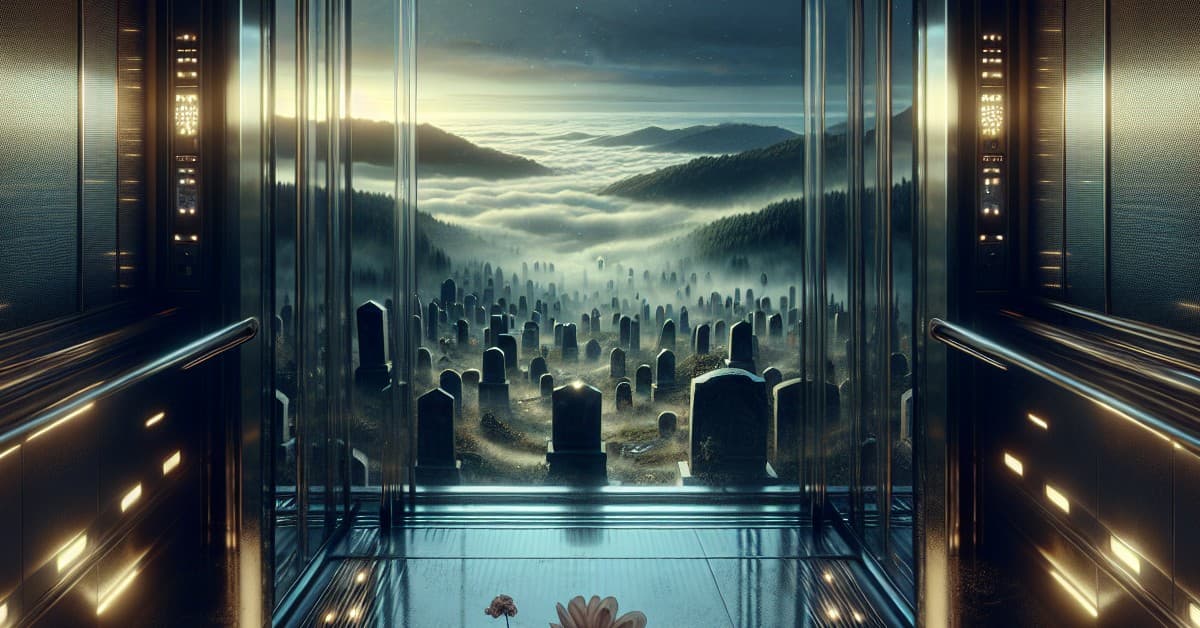
Aerith’s death elevator to Planet's Graveyard. pic.twitter.com/Qmni Cwi LjZ— FAITH (@nenofficial) December 18, 2025ADSThis passage stands alone in the game’s audio drama collection, making it easily accessible even to players who haven’t completed the main story. When she dies, Cloud loses control of his senses.
He describes seeing multiple versions of Aerith falling into nothingness; every iteration collapsing around him. The surreal imagery reflects how the event shatters his sense of reality. View this post on Instagram A post shared by FINAL FANTASY VII (@finalfantasysidevii)His breakdown also triggers memories of past traumas: the bomb inside Junon, Woozle Raceway’s massacre, and the Reunión church incident where Aerith watched silently as L Durandal killed Rafa.
These flashbacks ground the severity of the moment, reminding theplayer that Cloud carries far more baggage than a typical RPG protagonist. Rebirth mostly retains this important sequence, though it adds a brief conversation between Cloud and Aerith earlier in the Forgotten Capital. Interestingly, this exchange appears in the game’s official artbook, suggesting it was planned from the development stage — possibly meant to heighten the emotional payoff, much like Yuffie’s farewell to Tifa in Final Fantasy 7 Remake.
But here’s the thing: those added lines do exactly nothing. They don't deepen the narrative. They don't repair any psychological damage.
And they certainly don't justify skipping the most devastating part of the original game. In fact, removing the most heartwrenching momentheightens the confusion about why Square Enix insists on splitting such a short tale across three Full Release titles. Final Fantasy 7 has always been as much about trauma and redemption as it has been about combat and heroism.
Its battle system pioneered a generation of tactical RPGs without needing 20 hours of grind. Its story remains a benchmark because it lets its characters bleed, both emotionally and literally. And when the central pairing experiences something as irreversible as death, we don't need extra scenes or expanded dialogues to understand the magnitude of loss.
Sometimes, silence speaks louder. When Aerith dies, the player doesn’t need to be handheld through grief. You don’t need explicit instructions to feel helpless, tremble, or curl up under the weight of despair.
The game allows you to stare into abject terror alongside Cloud, and that’s far more powerful than additional lines could ever hope to be. If Rebirth intends to remain true to the spirit of the original, it cannot afford to trim the moments that give the story its soul without accounting for them elsewhere. Otherwise, the question remains: why split the narrative at all?
Why break it apart across three releases if the connective tissue — the reason players care about Cloud’s inner turmoil in the first place — is being steadily removed?