A Quiet Deal With Loud Implications
Sony has snapped up a specialized video-tech firm to make gameplay look cleaner and crisper before the next console cycle arrives. The timing isn’t subtle: with PS6 planning underway, PlayStation is buying know-how that can upgrade image quality whether you’re playing locally, sharing clips, or streaming from the cloud.
GameSpot reports the acquisition is aimed at "enhancing gameplay visuals," pointing to technology built around AI-powered upscaling, artifact cleanup, and smarter compression. In plain terms, this kind of software analyzes frames, predicts detail, and reconstructs sharper images from less data. That can mean more stable 4K, better motion handling, and fewer compression smears—especially when bandwidth is tight.
What The Tech Actually Does
The company Sony bought specializes in perceptual video processing—tools that pre-process frames before they’re encoded and shipped to your screen. Think of it as a quality pass that teaches an encoder what matters to your eyes. By sharpening edges, reducing noise, and preserving fine texture, it helps the final picture survive aggressive compression. Those gains are valuable across PlayStation’s ecosystem: PS Plus cloud streaming, Share Play, Remote Play, and even the clips you upload or send to friends.
Upscaling and super-resolution also play a role. Instead of brute-forcing higher native resolutions, AI models can reconstruct detail from a lower-res render, freeing up GPU time for better lighting, denser crowds, or higher frame rates. Developers already use similar ideas with temporal upscalers. Tying that approach deeper into Sony’s stack—both hardware and services—could push cleaner 4K and steadier performance without asking games to sacrifice ambition.
There’s another practical win: bandwidth. Smarter compression means smaller streams for the same (or better) image quality. Anyone who’s tried to play an action game over hotel Wi‑Fi knows how fast blocky artifacts can ruin clarity. If PlayStation can deliver a sharper picture at lower bitrates, cloud play gets more viable for more people, and Remote Play becomes less sensitive to your home network’s mood swings.
Why This Matters Ahead Of PS6
Regulatory filings during the Microsoft–Activision saga suggested Sony’s next console is still a few years out, which gives the company runway to stack the deck on core experiences like image quality. Buying proven video expertise now lets Sony fold those tools into devkits, SDKs, and system software long before retail hardware hits shelves. Expect any short-term benefits to show up first in cloud services and capture tools, then deepen as next-gen hardware arrives.
PlayStation has already signaled interest in advanced upscalers—PS5 Pro chatter centered on Sony-built "super resolution" tech designed to lift image quality with ML assistance. Pulling an AI-focused video team in-house complements that strategy. It won’t replace what engines like Unreal or proprietary solutions from studios already do, but it can standardize a baseline so more games hit a strong visual floor across TV, monitor, and mobile screens.
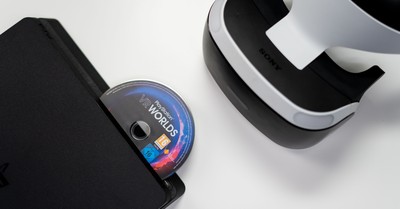
Don’t overlook VR either. PS VR2’s fast OLED panel benefits when edge clarity and texture reconstruction are handled with care; any reduction in shimmer or temporal noise is noticeable in-headset. Efficient preprocessing and artifact cleanup could help keep VR experiences sharp without pushing rendering costs through the roof.
What Sony’s Likely To Ship First
Short term, look for behind-the-scenes improvements: cleaner Share Play sessions, sturdier PS Plus cloud streams, and less blotchy motion in fast games. You’ll see the impact in places players often ignore—menus, foliage, hair, and fine patterns—because that’s where compression usually buckles. Over time, the same tech could sit closer to the metal on a new console, pairing with hardware upscalers and frame-generation pipelines to carry more visual weight per watt.
“Sharper picture with less data” is the kind of upgrade most players feel immediately, even if they never read a patch note. If Sony threads this through PlayStation’s services now and bakes it into future kits for studios, PS6 won’t need a flashy gimmick to sell better-looking games—just consistent, visible gains every time you press Share or boot a stream. That’s the quiet kind of future-proofing that pays off the first weekend a tentpole release hits and millions jump in at once.