
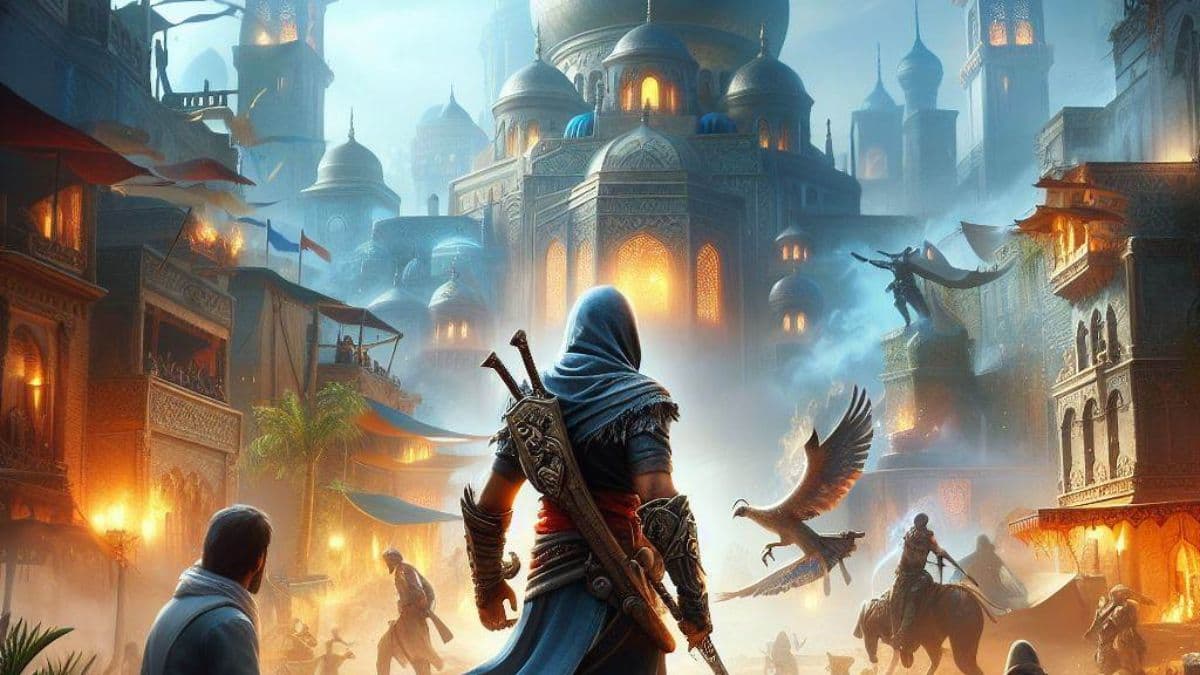
The gaming landscape has seen a significant shift, with developers exploring a diverse array of experiences, from colossal open-world games to narrative-driven titles. Ubisoft, renowned for its epic open-world adventures, is demonstrating that smaller-scale games like Prince of Persia: The Lost Crown and Assassin's Creed Mirage can offer immense value, challenging the notion that bigger always means better.
The Era of Large-Scale Games
Historically, the gaming world equated larger games with greater value. This perception gained traction in the 2000s with the rise of the open-world genre. Ubisoft, with franchises like Assassin's Creed and Far Cry, became a torchbearer for this trend. However, the ubiquity of sprawling open-world games has led to a sense of fatigue, with players often finding the extensive gameplay repetitive and monotonous.
Ubisoft's Strategic Pivot
Ubisoft's recent releases, Assassin's Creed Mirage and Prince of Persia: The Lost Crown, mark a strategic pivot. These titles, lasting about 20-30 hours, are considerably shorter than Ubisoft's typical releases like Assassin's Creed Valhalla, which demands around 60 hours for completion and over 100 for thorough exploration. Yet, these smaller-scale adventures have proven that they can captivate players with their focused narratives and well-paced gameplay.
The Value of Smaller-Scale Games
These latest titles challenge the traditional mindset that more content equates to more value. Assassin's Creed Mirage, a throwback to the franchise's roots, has been well-received for its concise yet impactful experience. Similarly, Prince of Persia: The Lost Crown, returning after a 14-year hiatus, has impressed players with its engaging gameplay and story, despite having less content than larger titles.
A Balanced Approach to Game Development
Ubisoft's shift towards smaller-scale games is not an abandonment of large-scale open-world titles but a balanced approach to game development. It reflects an understanding that different players seek different experiences. While some might prefer expansive open-worlds, others appreciate a more focused narrative journey.
The Future of Gaming Experiences
Ubisoft's success with Assassin's Creed Mirage and Prince of Persia: The Lost Crown indicates a growing preference for games that value quality over quantity. This trend suggests a future where gaming experiences are more varied, catering to a broader range of player preferences.
Conclusion
Ubisoft's foray into smaller-scale games has shown that these titles can offer as much, if not more, value as their larger counterparts. By prioritizing engaging narratives and well-paced gameplay, Ubisoft is redefining the notion of value in the gaming industry.
Final Thoughts
As the gaming industry continues to evolve, the success of titles like Prince of Persia: The Lost Crown and Assassin's Creed Mirage underlines the importance of diversity in gaming experiences. Ubisoft's approach in offering both expansive and focused games caters to a wider audience and enriches the gaming landscape.


