
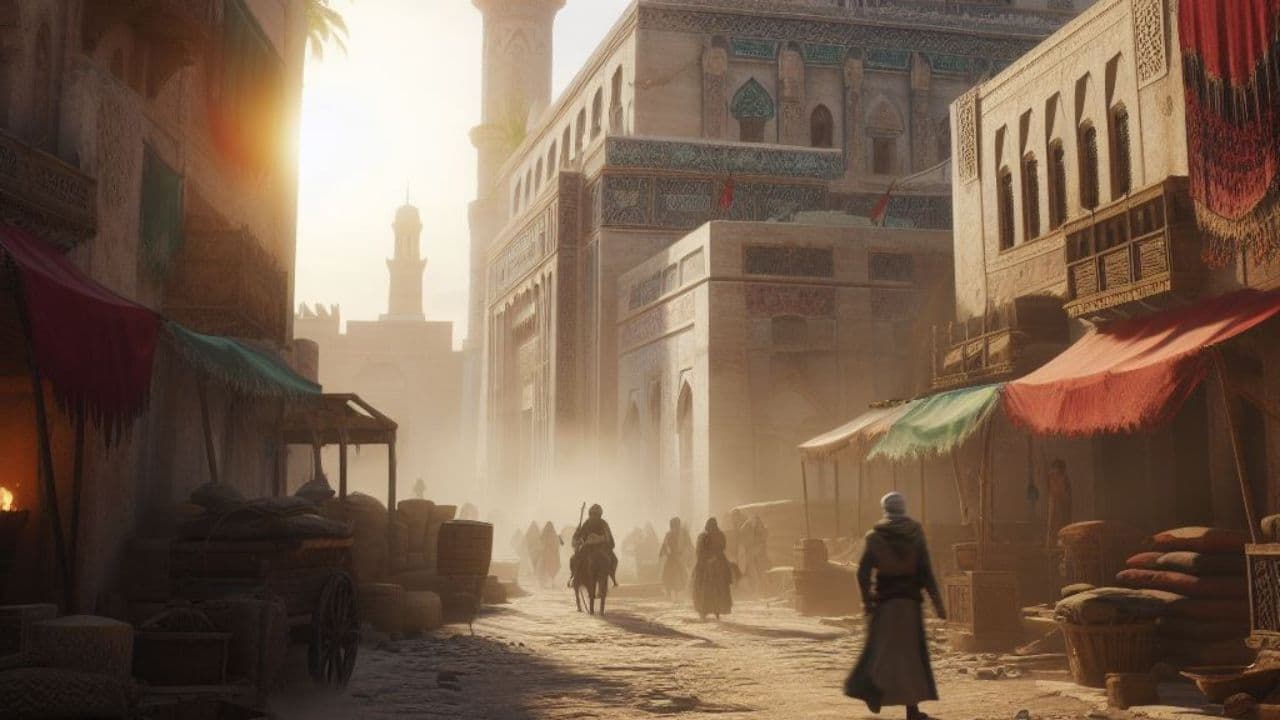
Assassin's Creed Mirage has captivated attention not just for its gameplay, but also for its extraordinarily accurate depiction of 9th century Baghdad. Such is the level of detail that it moved a historian to tears. Ubisoft, the developers of the game, have once again demonstrated their commitment to recreating historical eras with exceptional fidelity. In this article, we'll explore the significance of this achievement, its implications for the gaming world, and the response it has garnered.
The Setting: A Time Period Largely Unknown
The art director of Mirage, Jean-Luc Sala, has stated that the 9th-century Middle East is "uncharted" territory in terms of public knowledge. This period precedes the Mongol invasion in the 13th century that razed Baghdad, leaving little documentation about the city's earlier state. Creating a historically accurate portrayal was, therefore, seen as a "problematic" endeavor by historians consulted during the development process.
Risk and Challenges
Navigating the scant information available, Ubisoft faced the significant challenge of portraying a time and place not well-documented. They had to rely heavily on historical consultants to fill in the gaps and corroborate the elements included in the game.
The Historian's Perspective: A Digital World Brought to Tears
Dr. Ali A. Olomi, one of the historians who collaborated with Ubisoft, expressed sheer delight and emotional overwhelm when he first saw the digital representation of 9th century Baghdad. According to him, it was like stepping back in time and living the history he had spent years studying.
Emotional Connection and Professional Achievement
For Dr. Olomi, seeing the city brought to life was not just a professional validation but also an emotional experience. The digital world mirrored his life's work in a way that went beyond the scope of academic papers or verbal descriptions.
The Personal Touch: Art Director Jean-Luc Sala's Connection
Jean-Luc Sala, who grew up in Iran, spoke of Baghdad as a place that held good memories from his childhood. His emotional connection to the project added another layer to the intricate process of designing the game's environment.
Reflecting a Universal Sentiment
Sala's personal experiences and memories, like those of many others, find an echo in the game. For the players and the developers alike, Assassin's Creed Mirage serves as a conduit for connecting with a time and place otherwise lost to history.
The Cultural Impact: A Reminder of Contributions
Lee Majdoub, the voice actor behind the new assassin, Basim, emphasized how the game serves as a reminder of the rich cultural contributions that originated from the region.
A Celebration of Art and Science
According to Majdoub, the game showcases the historical significance of the region in fields such as art and science, thus augmenting the overall narrative and enriching the player experience.
Final Thoughts
Assassin's Creed Mirage stands as a remarkable example of how video games can serve as a powerful medium for educational storytelling, beyond just entertainment. The accolades from historians and the passionate work from the development team attest to the game's exceptional role in capturing a lost world with utmost accuracy.


