
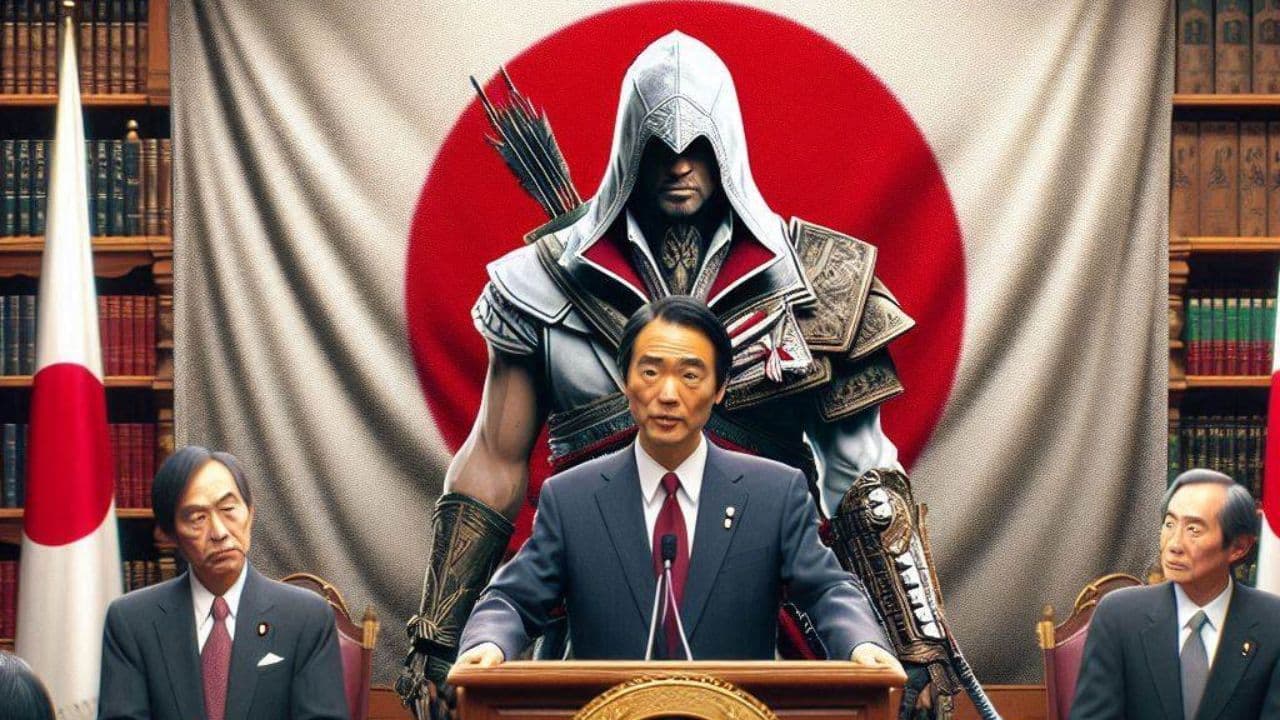
The recent announcement of Assassin’s Creed Shadows has sparked significant debate and controversy, particularly surrounding the portrayal of Yasuke, a black samurai. The character choice has led to widespread discussions and criticisms regarding the historical accuracy within the game. While Assassin’s Creed has often taken creative liberties with historical events and figures, the inclusion of Yasuke has prompted some to question the game's faithfulness to real history. These concerns have even reached the Japanese government, eliciting a formal response.
Historical Context and Controversy
Yasuke, the black samurai, is a figure of considerable intrigue and debate among historians. His story begins in the late 16th century when he arrived in Japan and eventually served under Oda Nobunaga, a prominent daimyō. While some records suggest Yasuke was indeed a samurai, concrete historical evidence remains scarce. This ambiguity has fueled the controversy over his portrayal in Assassin’s Creed Shadows.
The criticism centers on the perceived inaccuracy of depicting Yasuke as a samurai without definitive historical proof. Critics argue that Ubisoft, the game's developer, should adhere more strictly to historical facts. The outcry reached a peak when Satoshi Hamada, a representative of the conservative NHK party, requested a governmental review of the game's historical authenticity.
Japanese Government's Response
The Japanese government, through the Minister of Foreign Affairs, Yoko Kamiyama, responded promptly to the concerns raised. Kamiyama's response was straightforward and dismissive of the controversy. She emphasized that the government's only concern with video games is ensuring they do not violate public order and morality. Beyond this, Kamiyama asserted that it is not the government's role to intervene in the creative liberties taken by game developers.
Kamiyama further elaborated that the government did not take action against previous games featuring Yasuke, such as Afro Samurai, Nioh, or Samurai Warriors 5. She questioned why Assassin’s Creed Shadows should be treated any differently. This response suggests a consistent stance by the Japanese government in allowing artistic freedom in video game development.
Public Reaction and Historical Debate
The announcement of Yasuke’s inclusion in Assassin’s Creed Shadows has reignited debates among historians and the general public. While some view the character as an inspiring figure whose story deserves to be told, others insist on the necessity of historical accuracy. The portrayal of Yasuke in the game has led to a renewed examination of the historical records, with many historians stating there is no conclusive evidence that Yasuke was a samurai.
Despite the controversy, many fans of the Assassin’s Creed series argue that the franchise has always blended history with fiction, creating immersive and entertaining narratives that are not bound by strict historical accuracy. They contend that Assassin’s Creed Shadows should be judged as a work of fiction rather than a historical document.
Conclusion
The Japanese government's response to the Assassin’s Creed Shadows controversy highlights a broader discussion about the role of historical accuracy in video games. While the government has chosen not to intervene, the debate among fans and historians continues. The controversy underscores the challenges faced by developers in balancing creative storytelling with historical representation. As the release date approaches, it remains to be seen how Assassin’s Creed Shadows will be received by the public and whether the game's portrayal of Yasuke will meet the expectations of its diverse audience.
Final Thoughts
The controversy surrounding Assassin’s Creed Shadows and its portrayal of Yasuke serves as a reminder of the complexities involved in blending history with fiction. While creative liberties are often necessary for compelling storytelling, they can also lead to debates about historical representation. The Japanese government's stance emphasizes the importance of artistic freedom while acknowledging the sensitivities that can arise when dealing with historical figures. As players await the release of Assassin’s Creed Shadows, the ongoing discussions highlight the impact of video games on our understanding of history and culture.