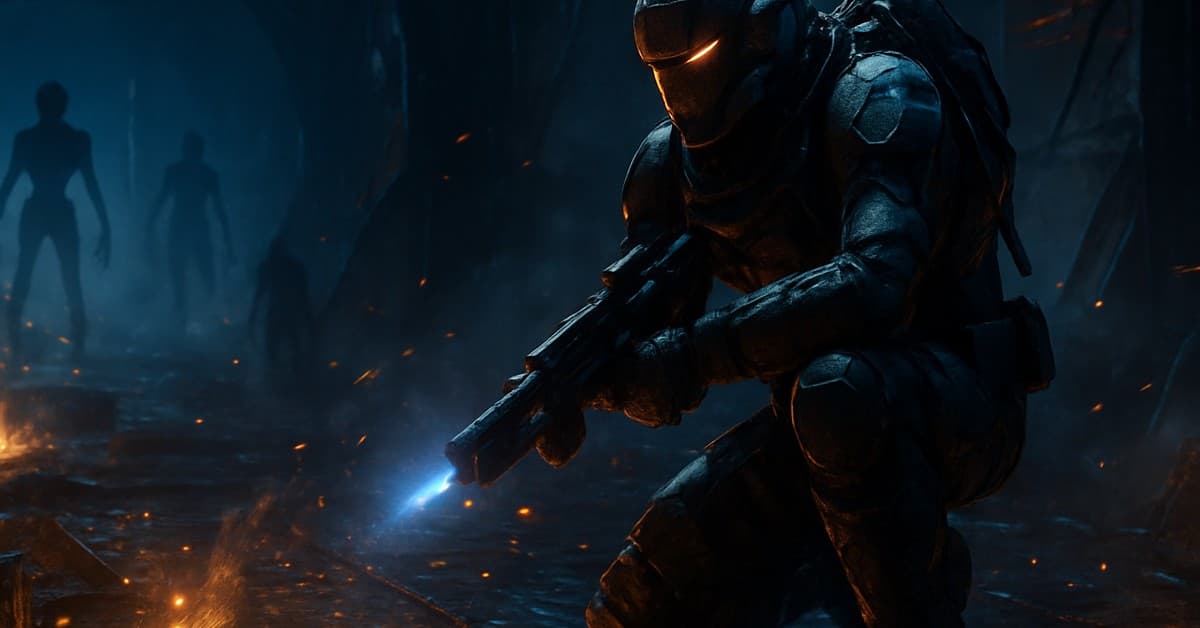
Saros opens with a blunt dare: "I love banging my head against a wall until it breaks!" That line fits Housemarque’s PS5 shooter perfectly, because this is a roguelike that wants you to fail, learn, and come back meaner on April 30, 2026. For players who bounced off Returnal, the appeal here is obvious: Housemarque has built a tougher but more accommodating loop, with enough customization to soften the blow without sanding off the edge.
Quick Facts — Saros
| Developer | Housemarque |
|---|---|
| Platform(s) | PS5 |
| Release Date | April 30, 2026 |
| Genre | Shooter |
That balance matters. Saros is not just another punishing bullet hell with a moody coat of paint; it’s a sci-fi/fantasy psychological horror spin on the roguelike shooter formula, and the way it ties challenge to story gives every death a little more weight. If you want a game that treats survival like a skill check and a narrative puzzle at the same time, this is the kind of release that can swallow a weekend whole.
What Is Saros?
Saros is a shooter roguelike from Housemarque on PS5, set for release on April 30, 2026. The game follows Arjun Devraj, a soldier working for Soltari, as he joins an expedition to Carcosa in search of assets the company wants to recover after previous scouting teams went silent. That setup sounds corporate and tidy on paper, but the planet’s shifting reality and the time loop underneath it turn the mission into something far stranger and more personal.
Rahul Kohli, known for iZombie and The Fall of the House of Usher, plays Arjun, and that casting does a lot of heavy lifting. Housemarque frames the story around a strong mystery-box structure, with Carcosa, the King in Yellow short stories, and the Echelon IV crew all feeding into the same uneasy mood. If you like your shooters with symbolism, paranoia, and a lead character who feels like he’s being peeled open by the plot, Saros has a very specific pitch.
What It Takes to Survive in a Shifting World
Saros leans hard on randomized runs and a time loop structure, and that combination drives the whole experience. Each time Arjun dies, he comes back with resources carried over, so failure still pushes you forward instead of wiping the slate clean. That means every run teaches you something concrete, and the game’s randomly generated world keeps you from settling into a safe route or a memorized rhythm.
That loop works because the game keeps changing the terms of the fight. Arjun’s assault rifle can roll with an autoaim perk, while other loadouts can leave you scrambling with a pistol that lacks range or a shotgun that clashes with a dash-heavy style. The result is a shooter that forces adaptation instead of comfort, and the best moments come when a bad start turns into a clean run because you finally stopped trying to force the same plan every time.
Housemarque also gives Saros a clear combat language, which is a smart move for a game this visually cluttered. Yellow projectiles can be dodged, blue ones can be absorbed with a shield, and red ones can be parried back at foes, so you’re not just reacting to noise — you’re reading the battlefield and making split-second decisions. That color coding matters more than it sounds, because when the screen fills up, quick recognition is the difference between a heroic escape and another trip back to the Echelon base.
Adapt or Die
The difficulty customization is one of Saros’s best ideas. Before each run, you can apply modifiers that help you, but every advantage comes with a tradeoff or a nerf, such as reducing incoming damage while giving up how many resources you keep on death. That system gives struggling players a real way in, while also letting masochists crank the pain dial higher if they want to prove something to themselves.
That flexibility makes the game feel more personal than most roguelikes. Instead of one fixed difficulty wall, Saros lets you decide how much punishment you’re willing to absorb, and that changes the emotional texture of every attempt. If you know you’re heading toward a boss and want to protect your build, the game asks you to make a hard choice. If you want to gamble on extra power now, it will happily let you do that too.
Those boss fights matter because the game keeps pushing you toward them with a sense of earned momentum. The review describes them as memorable and challenging, and that’s the right balance for a roguelike: the bosses should feel like a test of everything you’ve learned, not just a damage sponge with a bigger health bar. When Saros clicks, the loop of failure, resource carryover, and gradual mastery makes each return to Carcosa feel like progress instead of repetition.
Visuals, Audio, and Performance
Saros uses its visual design to keep you alive, which is more useful than flashy spectacle for its own sake. Housemarque’s color communication helps you read attacks even when the action gets messy, and that clarity becomes essential when the game throws demonic creatures, deteriorated machinery, and a constantly shifting world at you all at once. The sci-fi/fantasy psychological horror tone also gives the game a sharp identity, and the result feels more unsettling than generic.
Still, the review is clear that the game can be visually cluttered. That matters because clutter in a shooter is never just cosmetic; it can hide attack tells, blur the edge between danger and decoration, and make the player work harder than they should to understand what’s happening. Housemarque’s color system helps, but Saros still asks a lot from your eyes and your reflexes.
What Doesn’t Work
Saros isn’t trying to be easy, and that’s part of the appeal, but it also means some players will bounce off its sharper edges. The review says the larger cast ends up feeling like stepping stones for Arjun, which undercuts the promise of an ensemble story. If you wanted to really get to know the crew of Echelon IV, this game may leave you cold, because it keeps circling back to Arjun and the person he’s searching for.
There’s also the question of how much the game streamlines the roguelike structure. The review calls that a matter of personal taste, and that’s fair, but it still means some players who want a harsher, more old-school roguelike hellscape may find Saros a little too helpful at the start. That doesn’t make the design wrong. It does mean the game is making a deliberate trade, and not everyone will like where Housemarque lands.
Pros
- Tough but fair challenge
- Really compelling mystery box-style narrative
- Lots of options to tailor the challenge
- Arjun’s story is thorny and complicated in a compelling way
Cons
- The larger cast end up feeling like stepping stones for Arjun
- Your mileage may vary on some of the ways it streamlines the roguelike structure
- The game can be visually cluttered
Saros works because Housemarque understands that punishment only matters when the game gives you a reason to care about getting better. The randomized runs, resource carryover, and difficulty modifiers create a roguelike that respects your time even as it tries to break you, and Arjun Devraj gives that loop a strong center. It’s less convincing as an ensemble piece than it wants to be, but as a psychological challenge with real mechanical teeth, it lands hard. If you want a shooter that asks you to adapt or die, and then keeps asking, this is one worth pushing through.