
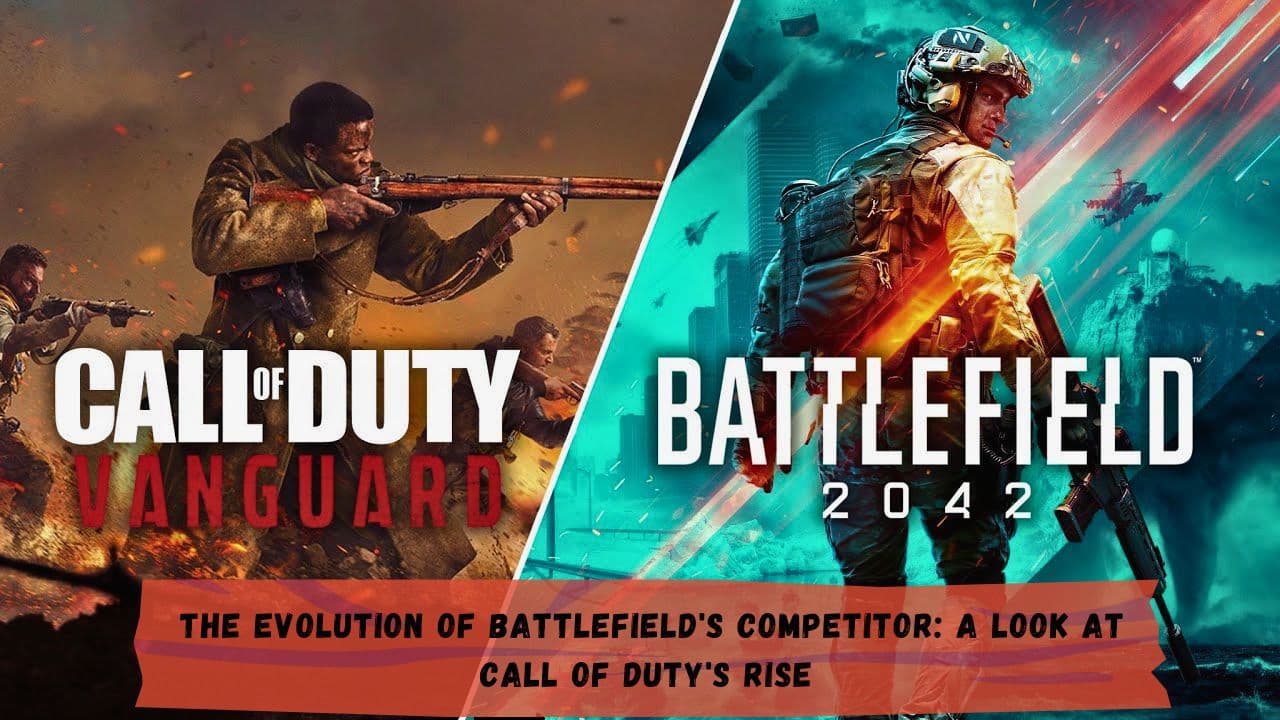
The Evolution of Battlefield's Competitor: How Call of Duty Became a Versatile Gaming Giant
The Battlefield series has witnessed its fair share of highs and lows over the last few console generations. Once the go-to destination for gamers seeking large-scale warfare in a AAA military FPS, Battlefield's throne has faced competition from an unexpected rival. In this exploration, we delve into how Call of Duty emerged as a viable alternative, challenging Battlefield's dominance in the world of military first-person shooters.
Battlefield's Rollercoaster Journey
The journey of the Battlefield franchise has been a rollercoaster ride. It began with beloved releases like Battlefield 3 and Battlefield: Bad Company 2, offering gamers thrilling experiences. However, Battlefield 4 stumbled out of the gate, plagued by a lack of polish, numerous bugs, and serious netcode issues. While it eventually stabilized, the franchise faced another setback with Battlefield 5, criticized for historical inaccuracies and a failed attempt at a battle royale mode. The lowest point came with the launch of Battlefield 2042.
During this time, Call of Duty saw an opportunity to capitalize on Battlefield's shortcomings and steal some of its thunder.
Call of Duty's Tactical Maneuver
For years, Battlefield and Call of Duty offered distinct experiences, attracting fans seeking specific gameplay styles. Battlefield excelled in delivering massive maps with a balanced mix of vehicles and infantry combat. On the other hand, Call of Duty catered to players who favored competitive arcade gameplay with small teams and no vehicles.
However, in recent years, as Battlefield struggled to meet its fans' expectations, Call of Duty underwent a transformation. Activision, the publisher behind Call of Duty, decided to diversify its offerings, making Call of Duty a versatile gaming giant.
Call of Duty's Success with Large Maps
The turning point for Call of Duty was the reboot of the Call of Duty: Modern Warfare subseries in 2019. It introduced a more realistic campaign experience and 6v6 multiplayer that leaned into a slower, tactical style. Ground War, a new game mode, was the game-changer. It featured large maps reminiscent of Battlefield, complete with objective-based gameplay, vehicles, selectable spawn points, and a larger player count.
Ground War's success continued in Call of Duty: Modern Warfare 2 and was carried over to Black Ops Cold War through its large-scale Fireteam experiences. While some criticized the mode for reusing maps from Call of Duty: Warzone, the game benefited from a constant influx of new maps through its live service and seasonal system.
Call of Duty: Warzone, a free-to-play battle royale mode, further expanded the franchise's appeal. It offered a massive map with vehicles, attracting players who craved large-scale warfare. Although it lacked some of Battlefield's iconic vehicles like jets and tanks, Warzone's free-to-play model made it an attractive option.
The Crucial Shift in Gaming Landscape
The crucial shift in the gaming landscape happened when Battlefield faced its own struggles with the divisive Battlefield 5 in 2018. Call of Duty capitalized on this situation by introducing large-scale multiplayer maps in 2019. As Battlefield lost some of its fanbase, Call of Duty stepped in to provide both big battles and the trademark close-quarters encounters that define the franchise. Call of Duty became a more complete package, giving players a versatile gaming experience.
Battlefield's Path Forward
In light of these developments, Battlefield's path forward may involve borrowing a page from Call of Duty's playbook. It should consider offering diverse experiences, including small-scale infantry-only maps, alongside the expected large-scale battles. Battlefield 3's Close Quarters expansion already demonstrated the potential of infantry-focused gameplay in the series.
Moreover, Battlefield should emphasize its strengths, such as iconic vehicles like jets and tanks and a commitment to environmental destruction. By striking a balance between the elements that set it apart from Call of Duty and adapting to evolving player preferences, Battlefield can mount a comeback and rekindle the rivalry between these two FPS giants.
The competition between Battlefield and Call of Duty has evolved, and Battlefield must evolve with it. By learning from its competitor's success and staying true to its own identity, Battlefield can once again stand as a formidable force in the world of military FPS, offering players diverse and thrilling experiences.


