
Third-Person Heart, Turn-Based Head
Four and a half hours with Star Wars Zero Company left me thinking less about hit percentages and more about moments: yanking a thug into a fuel drum with Jedi Padawan Tel-Rea Vokoss, or lining up a perfect crossfire as a droideka rolled in and never got to pop its shield. That tactical storytelling is pure XCOM, but everything around it feels closer to BioWare—cinematic, character-led, and laser-focused on making you care before the game threatens to take your squad away for good with permadeath.
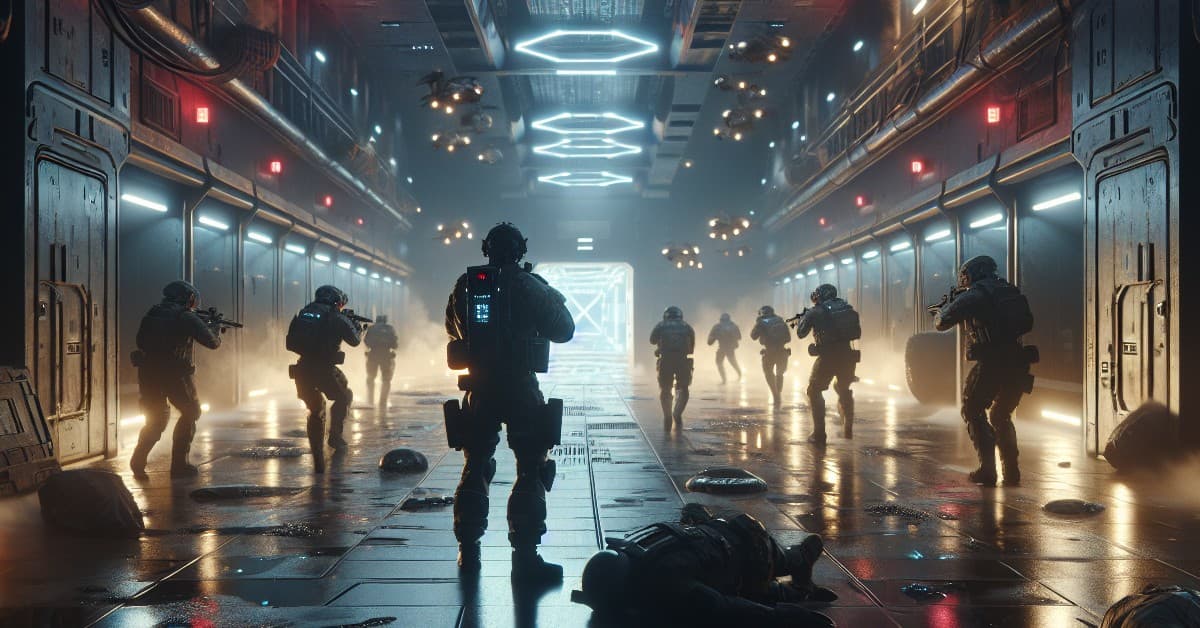
Bit Reactor’s pitch leans into that contrast. Outside of combat you steer a customizable POV protagonist named Hawks in full third-person, wandering striking Clone Wars-era spaces with the production sheen of a big-budget action game. The studio’s tight collaboration with Lucasfilm shows up immediately: richly lit hangars, war rooms alive with chatter, and a camera that knows when to punch in for a character beat or a kill shot.
Greg Foertsch, former art director on Firaxis’ XCOM and Marvel’s Midnight Suns, founded Bit Reactor and pulled in a swath of veterans—lead producer Caydence Funk, animation lead Hector Antunez, technical director Ryan McFall, and mission lead James Brawley among them. He describes his “axe to grind” as proving that tactics games can be elegant and cinematic without sacrificing depth. You can flip off the fancy camera angles and keep the same mechanics, sure, but why would you when the added context makes every decision land harder?
We wanted to capture the feeling of running an intelligence unit.
Grayson Scantlebury
That philosophy extends to Zero Company’s structure. Story missions stitch together third-person exploration with multiple bespoke combat arenas, while side ops offer focused tactical challenges. The net effect is Mass Effect’s rhythm—briefing, boots on the ground, squad chatter—translated to a sharper, turn-based cadence where every shot still costs something.
How It Plays: Familiar Bones, New Tricks
If you’ve played XCOM, the basics click fast. You field a four-person squad. Each soldier gets three action points per turn, with movement draining AP based on distance and some abilities demanding multiple points. A shared “advantage” meter fills as you press the attack and fuels powerful abilities independent of AP. Class ultimates burn big chunks—think a triple burst for the Assault or a rocket for the Heavy—while smaller utilities nibble at the same pool. Hawks can even spend a sliver of advantage once per turn to hand a squadmate a fresh AP, which opens clever tempo plays.
Zero Company’s feel is confident from the jump. The camera swings low for cinematic kill shots, then pulls back to a clean tactical view when you need a full read on flanks and firing lanes. Cover matters, suppression pins spawners before they flood the zone, and smart crowd control can flip a “this is bad” moment into an outright rout. During one set piece, I blanketed a droideka’s spawn with suppression as it arrived. It needed a turn to set up; my squad carved off most of its health before it got moving, turning the hardest fight of the day into a walk.
Side missions keep the classic loop tight: single-map jobs like elimination, hostage rescue, and hold-the-point, all hand-built with procedural enemy mixes based on where you are in the campaign. I made my biggest mistake on a rescue. I sprinted early, triggered reinforcements with my team split, and barely scraped an evac while two squadmates bled out in the extraction zone—an outcome that hits harder when those losses can be permanent.
Story missions flex more variety and introduce nastier puzzle-enemies. One faction fields force-touched shock troops who turn death into fuel. Drop one, and a floating spirit drifts to buff a nearby ally; stack enough buffs and that target goes berserk and basically morphs into a mini-boss. The right answer is to manage health bars so a weakened foe takes the rage. I learned the wrong way.
I stumbled into a slugfest with a hulked-out cultist tanking my entire crew.
Systems-wise, Zero Company rarely over-explains. It trusts you to read encounters, spend advantage at the right moment, and position for the turn after this one. When it clicks, it’s that satisfying XCOM headspace—except the connective tissue between fights is richer, and the faces you bring into harm’s way feel more like people than pawns.
Why It’s Not Just ‘Star Wars XCOM’
Presentation changes how tactics games land, and Bit Reactor knows it. Antunez described a constant push-pull between what looks best up close and what plays best zoomed out, a balancing act designed to let you soak in these spaces without compromising the tactical clarity. “We pick our battles,” he said. The result is a game that invites you to linger in environments, then snaps back to crisp, legible combat the moment you issue a move.
That approach reframes expectations. Zero Company isn’t just accuracy rolls and overwatch cones with a Star Wars skin. It carries itself like a story-first RPG while keeping the tension of turn-based tactics—persistent wounds, hard choices, and the very real risk of losing a veteran clone you’ve grown attached to. The difference is how much it gives you to hold onto before it asks you to risk it.
She talks like the Star Wars version of a Communist kicked out of the party for being too annoying.
Credit also goes to the team’s genre experience. Foertsch and crew speak openly about making strategy feel approachable across PC, console, and handheld—genres that once struggled to make the jump now win players by presenting well. Zero Company follows that arc with a clear thesis: keep the XCOM-grade decision space, wrap it in best-in-class Star Wars staging, and let players live with the consequences.
If Bit Reactor can maintain this level across a full campaign, 2026 could have a sleeper on its hands. The hook is simple: Mass Effect energy between missions, tense turn-based fights when blasters come out, and the kind of stakes that make every evac and every loss stick with you. That’s a potent combo—one that could make Zero Company the year’s most surprising Star Wars game.